
I waited 28 years for Scotland. LPs are waiting 7 years for their capital back.
Hey there,
I've been in various states of 'under the weather' the last few weeks with a virus. Turns out, using blind optimism to convince yourself you're getting better then 'pushing through' to only succeed in sinking further into the hole is not the play. When will I learn...
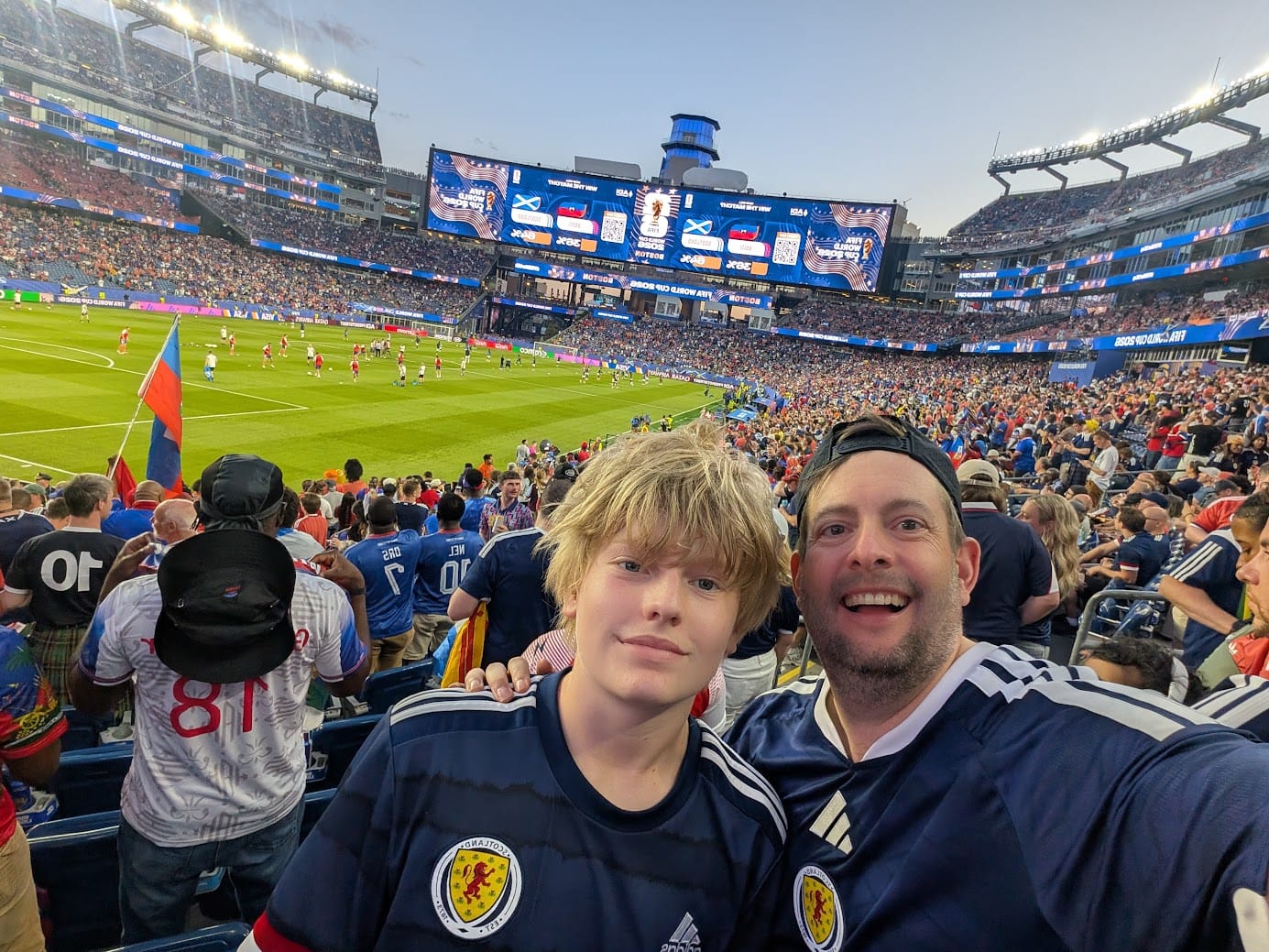
I'm safely on the other side of it now though and grateful for the team keeping all on track with clients and, most of all, that I was recovered enough to travel to Boston last weekend to realize a lifelong dream of watching Scotland play at the World Cup.
One upside of the 28-year wait for this opportunity was being able to enjoy it with my youngest son. It's a night we'll both always remember.
While not quite the 28 years I waited, Bain's latest PE report shows implied capital cycle is turning into a longer and longer wait - 7 years up from a historical average of 5, and climbing. More on that below.
It's the 'smart take' du jour in PE circles that the best route to returns right now is value creation. And yet....firms are still light on specific value creation resources, despite the huge AI opportunity on everyone's doorstep.
We're seeing more and more client inbound about data/AI opportunties in mid-hold PortCos, so our experience is certainly matching the tradewinds!
In other news, I had the privilege of hosting Frank Lofaro on the PE Data Guy podcast. Frank was employee number 12 at acquistion.com and led building that team out to over 100 in his time there. So much gold on how to properly run and - super importantly - how to measure recruitment processes in a PE environment.
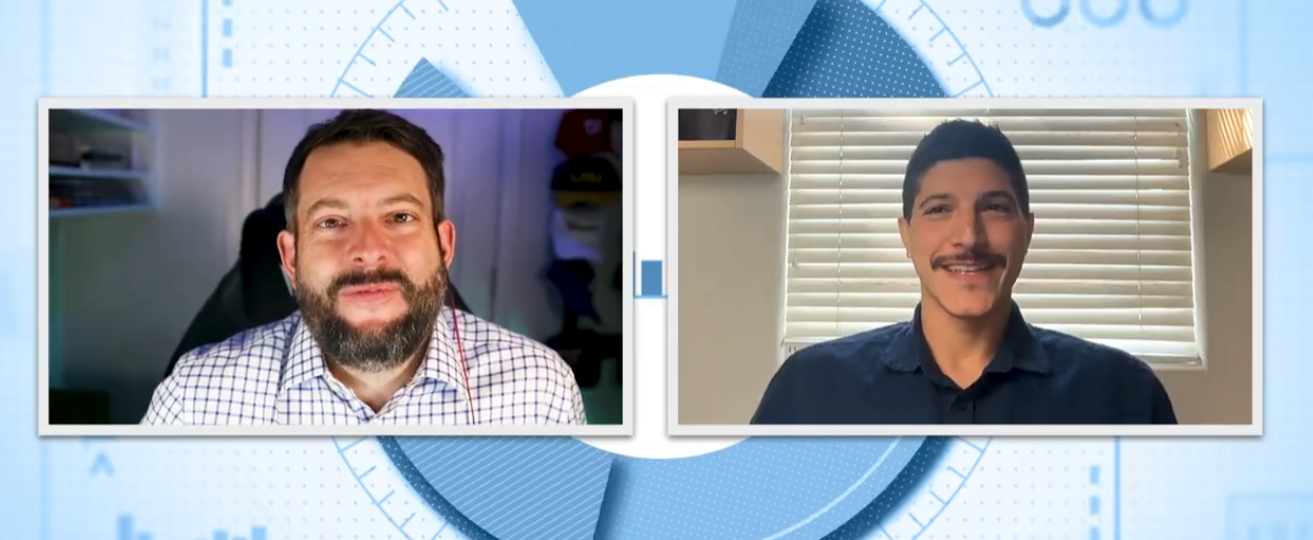
Check out the full episode here
Enjoy the rest of the memo!
Graeme
Three Things I Learned This Week
The R most operating partners leave out of their job descriptions
This week’s PE Data Guy is with Frank Lofaro. He spent six years building the talent function at Acquisition.com from employee number 12 to a team of over 100, and now runs Tank Recruiting, where he works with founders and PE-backed companies on executive hiring. Frank thinks about recruiting the way good operators think about revenue. Top of funnel, conversion, unit economics. The line that stuck with me from the conversation explains a failure pattern I keep seeing in portfolio companies.
Frank uses a four-part framework for job descriptions. Role, Responsibilities, Results, Requirements. The first two are obvious. The fourth is table stakes. The third one is the one almost every operating partner skips.
“Results” is the question of what you are expecting this person to actually accomplish. Not what they will do but what they will deliver.
A VP of marketing job description that lists “manage paid acquisition channels” is describing responsibilities. A VP of marketing job description that says “take CAC payback from 18 months to under 12 in the first nine months” is describing results.
The first hire takes the job to do the work. The second hire takes the job to hit the number. The cost difference between those two hires over a holding period is enormous.
Frank’s frame, which I think every operating partner should write down. “The candidate who reads the role and thinks ‘this feels like it was written for me’ is the one you actually want. That happens when the results are clear, not when the responsibilities are long.” The fix takes ten minutes per requisition. The impact runs across the entire hold. Watch the conversation here.
The capital cycle is now 7 years. Most of your portcos were bought before 2021.
Bain’s Private Equity Midyear Report 2026 landed last week. The cover line is “Control the Controllable, Weather the Rest,” which sounds like a poster on a college dorm wall. The data point buried in the middle of the report is the one operating partners should sit with.
By NAV, a majority of buyout holdings in North American and Western European portfolios were acquired in 2021 or earlier. These are assets that were underwritten before the pandemic, before rising rates, before tariff turmoil, before the AI-driven SaaSpocalypse, and before AI rewrote competitive dynamics in every sector they sit in. They have been through a gauntlet of market shocks. They are still in the portfolio.
The implied capital cycle, per MSCI Private Capital Solutions, is now approximately seven years. The historical norm sits closer to five. Distributions to NAV have stayed below 15% for four straight years. The 2010-21 average was 25%. The structural condition the industry calls “trapped” capital is now the default state of half the buyout universe.
What’s interesting is that the trap is partly self-imposed. ILPA polling cited in the report shows that a majority of LPs lose confidence in a GP when the discount to the last mark exceeds 5% on a full exit. The tolerance is tight. GPs concerned about what they might actually get on the open market choose to hold longer rather than risk being marked down. The MSCI data on actual exit multiples, which I’ll cover next, suggests GPs are being more cautious than they need to be. But the LP psychology drives the GP behaviour, and the cycle stretches another quarter.
For an operating partner reading this, the practical implication is uncomfortable. Almost every portco in your portfolio is either past typical hold or pushing it. The question for each one is not whether it needs to exit. It is whether it can survive the scrutiny of a buyer who knows the company is aging out and will price accordingly.
The data point in the Bain report that runs against every doom headline
The other Bain finding that almost nobody is going to write about is the one that should give operating partners more conviction than they currently have. The exit market is performing better than the doom narrative suggests.
MSCI Private Capital Solutions data, cited in the Bain report, shows that more than 75% of buyout assets are still exiting above their next-to-last quarterly mark. 57% exit within 10% of their final mark, on the high side. The “pop” above the mark that buyers have historically paid on exit has not gone away. Despite the bid-ask spread widening, despite the investment committee pullback, despite the sharp drop in dealmaking volume, when assets actually do trade, they are clearing close to or above what the GP marked them at.
The implication for portcos preparing for exit is the bit worth underlining. The market is not refusing to pay. It is refusing to bid blind. The companies that have done the work to defend their numbers cleanly are still clearing at expected marks or above. The companies that cannot defend their numbers under scrutiny are the ones generating the failed processes and re-trades that are dragging the headline data down. The pricing signal is intact. The credibility filter has just gotten sharper.
If you are running a portco that needs to trade in the next eighteen months, the question is not whether the market is ready to pay. It is whether your company is ready to be paid for.
Two News Stories From This Week in Mid-Market PE and Data
Bain identifies the three shocks that braked PE’s 2026 recovery
Sources: Bain Private Equity Midyear Report 2026 | Bain press release on the report
What happened. Bain’s midyear report names the three shocks that broke the rebound nearly everyone expected at the start of 2026. The AI-driven “SaaSpocalypse” that knocked roughly 30% off public software valuations in February (with private buyout software marks dropping about 8% in Q1). Redemption stress in private credit. The Iran war and the spike in oil prices that came with it. The combined effect on PE has been sharp and wide-ranging. Bid-ask spreads widened. Investment committees pulled back. Exit momentum that had been quietly building through late 2025 stalled out. Technology deal value alone dropped 70% from Q4 2025 to Q1 2026, with only four $1B+ tech deals closing in Q1 versus 15 in Q4. The Ontra NDA index, a leading indicator for deal volume three months out, points to dealmaking remaining flat through July.
Why you should care. This is the structural context for every operating partner conversation between now and exit. The capital is still there. The dry powder is at record highs. The debt markets are functioning. What’s missing is confidence around what assets are worth in an AI-inflected world. The portcos that prepare for buyer scrutiny under these conditions are the ones that will catch the deals when confidence returns. The ones that wait for the macro to clear before tightening their numbers will arrive at exit alongside everyone else, into a more competitive auction, and at the same lower multiple. The dispersion of outcomes in the next twelve months is going to be wider than at any point in the last cycle. The companies that do the work now sit on the right side of it.
Capital is still forming at the mid-market, even as exits stall
Sources: THL Fund X close announcement | Twin Bridge Capital Partners Fund close
What happened. Thomas H. Lee Partners closed its tenth flagship fund at $6.35B, with mid-market fintech, healthcare, and tech and business solutions as the stated focus. In the same window, Twin Bridge Capital Partners closed an oversubscribed $855M fund targeting the lower-mid-market. That is over $7 billion of fresh dry powder pointed at the segment of the market where most operating partners actually live. Both closes came against a backdrop of stalled exits and the Bain midyear’s “Groundhog Day” framing of a recovery deferred again.
Why you should care. The capital is still coming. The buyer pool for your portfolio company’s eventual exit is healthier than the macro headlines suggest. The disconnect between fundraising momentum and exit momentum is what creates the timing arbitrage for portcos that prepare early. The sponsors that close funds today need to deploy in the next eighteen to thirty-six months. They will pay better multiples for companies that show up to diligence with data that traces cleanly to source and revenue that survives scrutiny. The companies that prepare for that buyer mindset now are the ones that catch the early wave of deployments. The ones that wait meet the same buyer in a more competitive auction six quarters later. Same buyer, different multiple.
Free Tool of the Week - Diligence Clock
Most operating partners think about diligence as a six-week event that happens twice in a five-year hold. The companies that exit at premium treat it as a continuous capability and start eighteen months early. The Diligence Clock is a two-minute interactive tool that maps where your portfolio company sits on the timeline and which workstreams should already be in motion. Useful before the next operating partner review. More useful before the next exit conversation starts.
Sign-off
If any of this lands and there is something you think we can help with, just reply. We read everything that comes through.
As always, forward this on to your favorite PE-backed friend.
Cheers, Graeme