
“Drunk on multiple expansion.” A PE operator names the era.

Hey all!
This week's ‘adventures with teenagers’ involved a trip to a super cool venue in DC to watch a rap concert with my 14-year-old.Now, this isn't really my scene, but I was still able to enjoy what was a surprisingly chilled-out vibe. Everyone was just excited to have a good time and experience something together.
I maintain there's nothing like getting a room of people together who all love the same thing. As you can see.
Seeing a sea of phones at a concert is not a new thing, nor is it exclusive to teenagers. What fascinated me, though, were the numerous attendees who actually filmed themselves on selfie mode lip-syncing along to the artist rather than at the stage. New levels of digital immersion I guess and great news for cloud storage providers!
I feel like the whole industry is talking about data this week so plenty of things to feature below.
Enjoy the rest of the memo!
GC
Three Things I Learned This Week
Lee McCabe named the era we’re in
My industry peer Lee McCabe went on the Private Equity FunCast this week. Hosts Devin and Paul asked him what broke in private equity. He named it.
“Seventy percent of the time, the CEOs don’t make the exit during the hold period, so that obviously isn’t working.” Same episode, on the era before it: “They got drunk on value creation plans that were actually multiple expansion and leverage driving the returns, and not these 100-day plans.”
Cheap debt and multiple expansion in a decade of tailwinds taught the industry it only needed to be good at governance. The era ended and the operating muscle wasn’t underneath. Which is why 70% of installed CEOs get fired before an exit, and why installed CEO after installed CEO has become a line item in most portfolios.
Another line from the same episode kept coming back. “Data is only as good as the conversation it creates.” If your five leaders each carry their own definition of an active customer, you have five conversations and no decision.
Lee’s phrase for the fix is “one source of truth, not five different sources with different definitions of the word conversion.”
That is the operating muscle Lee is pointing at. Data foundations for value creation, in his exact phrase, which he said twice in the same conversation.
Check out Lee’s prior appearance on PE Data Guy here for more of the same.
Fortune 100 taught him what questions to ask. The mid-market taught him no one can answer them.
Jeremiah Wanzell spent 22 years scaling consumer brands, most recently running $225m at Calvin Klein. Then he crossed the aisle into private equity as an operating partner in the consumer sector, and originated the Capezio acquisition for Argon that won M&A Deal of the Year.
He came on PE Data Guy last week to talk about what changes when a Fortune 100 operator walks into a $75m portco.
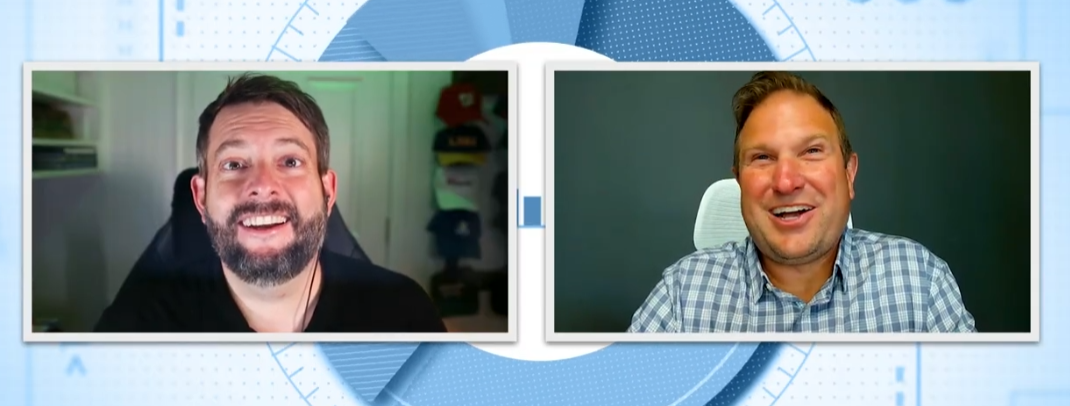
“Fortune 100 taught me what questions to ask,” he said. “The mid-market taught me no one can answer them.”
At Hugo Boss he had proper demand planning and SKU-level analytics that went down to weekly sales-through by door. At a $75m portco he pieced Shopify dashboards together with wholesale spreadsheets, and asked Cheryl in accounting for whatever else he needed to close the picture.
He gave one concrete example. A portco was calculating IMU on a wholesale number rather than a landed cost. Their business looked worse on paper than the fundamentals showed. The board never saw a real margin number until someone from outside came in and asked how the calculation was being done.
The company is either better or worse than the numbers say, and the operators cannot yet tell which.
Full Jeremiah Wanzell episode here.
Everyone bought AI. The EBIT didn’t notice.
McKinsey’s 2026 State of AI landed this week. 1,719 organisations, 97 countries. Nearly nine in ten use AI in at least one function. 44% are scaling it enterprise-wide, up from 38%.
Underneath that, 37% can attribute any EBIT impact to AI. Last year, also 37%. A full year of enterprise-scale AI adoption moved the seat count and did not move the P&L.
The 6% who can show real EBIT are unchanged from last year too. The differentiator is workflow redesign and committed senior leaders, the unglamorous part that was always the job.
The mid-market implication is worse than the aggregate. 80% of individual employees say AI made them personally more productive, and Lee McCabe’s read on the same data is that the uplift “stops at the individual’s desk and never reaches the income statement.”
For any operating partner whose 2026 VCP has an “AI initiative” line, this is the question that has to survive the September board pack. Are we in the 37% that can point to a P&L number, or are we in the 63% that has been spending on AI for two years and cannot show one?
If the honest answer is the second, the fix is one set of numbers the board trusts. Another vendor demo will not do it.
Credit Lee McCabe at Not Very Private Equity for the frame.
Two News Stories From This Week in Mid-Market PE and Data
Software deal value is down 90% from peak
Sources: Cherry Bekaert PE Mid-year 2026 Report | Not Very Private Equity Sep 4 edition
What happened. Software deal value fell 65.7% year over year to an estimated $10.7bn in Q2 2026, down 90.3% from its peak three quarters earlier. The historical driver of mid-market PE returns, SaaS platforms with recurring revenue and roll-up thesis, is the sector where buyers are least willing to lean in right now. The parallel McKinsey finding is that 32% of organisations chose not to buy a software product because they could build it in-house with coding agents.
Why you should care. If a chunk of your portfolio is software, two things are compounding on the wrong side. The exit multiple environment for software is at a decade low, and one of the fundamental buy-side questions is now “why would we buy this when our engineering team can build it with AI in a quarter?” Neither of those problems gets solved by another product update. They get solved by proof that revenue is durable and that the customer usage story would survive a 30-day diligence read. Renewal risk from coding agents is a data question first, and it belongs on the second-sale readiness checklist for every software portco right now.
Secondaries got institutionalized this quarter
Sources: PitchBook 2026 secondaries data | Not Very Private Equity Sep 4 edition
What happened. Secondaries fundraising hit $140bn last year and is running at $54.3bn across 49 funds so far this year. CVC closed Secondary Opportunities Fund VI at $10bn, nearly four times its 2019 vehicle.
Constitution Capital launched a collective investment trust for defined-contribution retirement plans. Pantheon wrapped infrastructure secondaries into an evergreen fund. Vanguard’s default framework still starts most retail savers at zero PE, so retail has not turned yet. The industry is building the plumbing.
Why you should care. The read for mid-market operating partners is that continuation-vehicle capital is still there, and it is getting larger and more sophisticated by the quarter. That is the good news.
The less-good news is that LP scrutiny on CV pricing is tightening at the same time the pool of assets is expanding. So the CV market is a bigger door and a harder one to walk through. The portcos that clear it have clean numbers and a customer story that survives an LP-side diligence read.
Free Tool of the Week - The Mid-Market PE Firm Directory
Still the most-visited free resource we publish, which continues to say more about how thin the structured data on this corner of the market is than it does about the directory itself.
The use for it this week, given the stories above. Software deal value at a decade low and secondaries capital getting bigger and pickier at the same time means the shape of your realistic buyer pool has moved.
The directory maps 218 US mid-market firms with check sizes, target EBITDA, sector focus, and whether they build through add-ons.
Filterable by sector, state, or strategy. If the exit conversation is 12 to 24 months away for a portco you back or run, this is the fastest way to figure out who the real buyer is and what they will look at.
Sign-off
If any of this lands and there is something you think we can help with, just reply. We read everything that comes through.
As always, forward this on to your favorite PE-backed friend.
Cheers,
Graeme