
Beaten by a calculator I'd never heard of

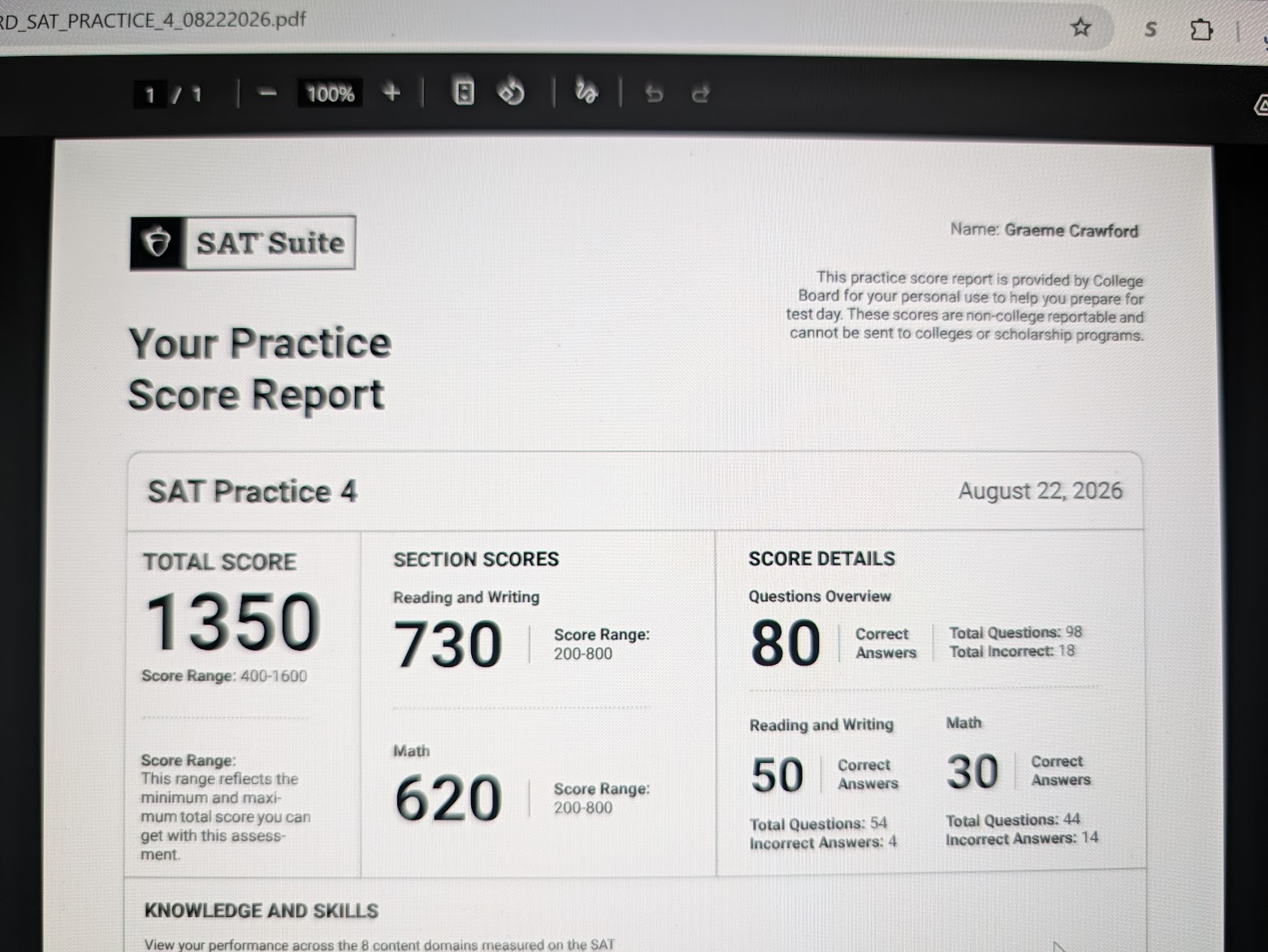
I took my first ever SAT exam this week. My 16-year-old has just entered his junior year at high school. This was partly an empathy build exercise and partly a benchmark for me to see if I would be capable of providing assistance in his preparation without any experience of the US education system.
Having studied math to a point where it was effectively a minor in my college degree, I thought this is where I'd come up big for him. In a fascinating twist he actually pretty much beat me on the math section...
The key to his success was the mystical Desmos calculator. I had never seen one of these and didn't use it once in the exam. Turns out it's critical to success in the math section.
My attempts to brute force quadratics were not only more susceptible to failure but also took way longer and led to me running out of time.
It dawned on me how similar this was to the PE portfolio companies I often speak to.
You can have all the institutional legacy knowledge in the world but if it's not formatted or structured in a way that it will work with modern tools, then you're ultimately going to get left behind.
For those wondering, I did get 100% on the data analysis section. Don't worry, your company's data strategies are safe in my hands.
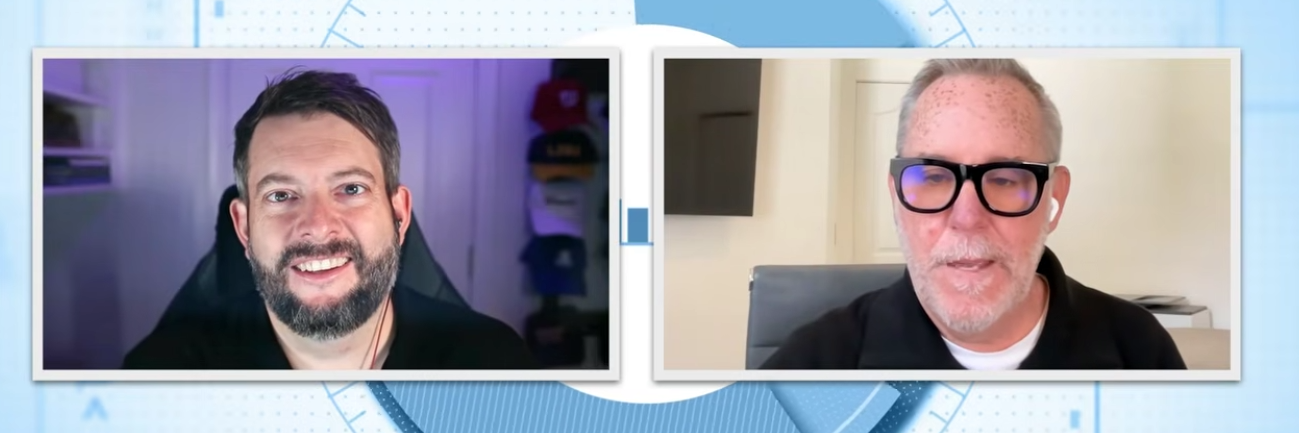
Another great new episode of PE Data Guy this week featuring David Newcombe, who sat in the operator seat through two private equity transactions at the same company. One of the best episodes to date. Thoroughly recommend you give it a watch.
Enjoy the rest of this week's memo!
Cheers,
Graeme
Three Things I Learned This Week
David Newcomb gave me a phrase for what erodes after the wire clears
David has a name for what happens to companies after the wire clears. Value drift.
Value drift is the erosion of the non-metric contributors to a business’s success. The founder’s passion, the reason customers renew, the market presence that attracted the sponsor in the first place. None of it shows up on the board pack. All of it is what made the business worth buying.
David watched it play out through two transactions. The pattern was consistent. Sponsor arrives, focused on the asset. Revenue, margin, earnings, and cash conversion get prioritized. The why gets skipped. The founder transitions out and the passion goes with them. Weeks in, employees can feel it. Years in, the sponsor is on the third CEO, wondering why every metric is still green and every plan is still missing.
David asked one of those newly-installed CEOs a question. “How do you think this business got here?” He got zero answer. The people running the plan could not name the reason the business was worth having a plan for.
He gave me a phrase for that too. “There’s a translation between the what and the why and the outcome that is missing.”
The dashboard is green. The value drifted years ago. Watch the full conversation here.
The exit market halved in Q2, and the concentration underneath is worse than the headline
The most sobering chart in Cherry Bekaert’s mid-year 2026 US PE report is the exit-activity graph.
Q2 US PE exit value came in at $102.6 billion. Down 46.3% sequentially. Down 7.4% year over year. First-half realizations of $293.7 billion ran 12% behind the same window in 2025.
Underneath the aggregate, the concentration is worse than the headline suggests. Mega-exits of $1 billion or more totaled $63.2 billion across 23 transactions, anchoring more than 61% of quarterly exit value. Premium assets can still clear at scale. Almost nothing else can.
Which is the read on the current market. Exits are not impossible. The buyer-side bar has moved up hard, and everything short of premium is sitting in a queue that grew to 13,509 US PE-backed companies as of Q2.
The exit market did not disappear. It got selective, and it got expensive to prove. The companies that defend their numbers under a hard buyer look clear the process. Everything else stays in the queue.
B2B is winning the exit market. Everything else is in the queue.
Cherry Bekaert’s data has another finding worth pulling out separately.
B2B assets generated $40.6 billion of exit value in Q2, roughly 45% of all realizations. The five-year sector-average share is 25.9%. Year to date, B2B exits are up 144.6% over the first half of 2025.
Every other major sector went the other direction. IT exit value is down 77.1% year to date. Healthcare is down 35.8%.
The pattern underneath the numbers is that the exit market is not just concentrating by size. It is concentrating by sector. B2B services, particularly the tech-enabled kind with recurring revenue and defensible contracts, are what buyers can underwrite quickly right now. IT is waiting for the AI question to resolve. Healthcare is wading through structural sector uncertainty.
For a mid-market operating partner, the practical implication is stark. If your portco is B2B services with clean revenue and clear renewal signals, the buyer-side demand is real right now. If it sits in IT or healthcare, the queue got longer this quarter and the readiness bar for clearing it got higher.
Two News Stories From This Week in Mid-Market PE and Data
The continuation-fund escape hatch is narrowing
Sources: Cherry Bekaert PE Mid-year 2026 Report | Schroders on continuation investments
What happened. The continuation-fund market, which has been the go-to release valve for portfolios that cannot clear through traditional exits, is itself cooling. 69 continuation-fund exits closed globally through Q2 2026, short of the pace needed to match the 158 that closed in 2025. That is a meaningful pullback. The 2024 context. Continuation-related buyout and growth-capital exit value hit close to $45 billion, roughly 7% of all distributions. GP-led secondaries had been the industry’s cleanest coping mechanism for the exit backlog. Volume expanded 34% year over year in 2025. It is pulling back this year.
Why you should care. If you have been quietly assuming a continuation vehicle is a viable backstop for the portco that will not clear a traditional exit, the data says that door is narrowing. LP scrutiny on CV pricing has tightened. Buy-side syndicates are pickier. The pool of portfolios that can support a credible CV thesis is smaller than a lot of GPs modeled in their 2026 planning. The direct implication for operating partners. The pressure to make portcos exit-ready rather than exit-adjacent just increased, because the polite alternative to a real exit is closing.
The “durable recovery” headline is real at the top, and stalled below it
Sources: With Intelligence PE Outlook 2026 | Cherry Bekaert PE Mid-year 2026 Report
What happened. With Intelligence published a piece framed as “Durable Recovery Begins,” quoting Blackstone’s Jon Gray that “the deal dam is breaking.” The evidence base is the big-six PE managers who realized $64 billion from traditional PE portfolios in 2025 and have positive outlooks for 2026. In the same window, Cherry Bekaert’s mid-year US report shows exit value collapsing 46% quarter over quarter and inventory piling up to 13,509 US portcos.
Why you should care. Both stories are true. The recovery is real at the top and stalled below it. The big-six exits are getting done at scale because they are premium assets with global buyer pools and IPO optionality. Mid-market portcos do not get any of that. They get sponsor-to-sponsor auctions in a market where sponsor buyers are being more selective than they have been in a decade. The trap the “durable recovery” headline creates for mid-market operating partners is the assumption that the macro tide lifts every portco. It does not. Scale operators are executing at the top of the market. Mid-market execution requires a different, more specific playbook, one where the data foundation and the value-creation narrative have to do more work to compensate for the exit pool narrowing.
Free Tool of the Week - Diligence Clock
Given the exit window is now measured in months rather than years for most mid-market portcos, knowing where each of yours sits on the readiness timeline is worth two minutes of anyone’s Monday. The Diligence Clock maps each portco against the workstreams that should already be in motion for a credible sale in the next 12 to 24 months. One page. Two minutes. Useful before the next investment committee review of the portfolio’s exit sequence.
Sign-off
If any of this lands and there is something you think we can help with, just reply. We read everything that comes through.
As always, forward this on to your favorite PE-backed friend.
Cheers,
Graeme