
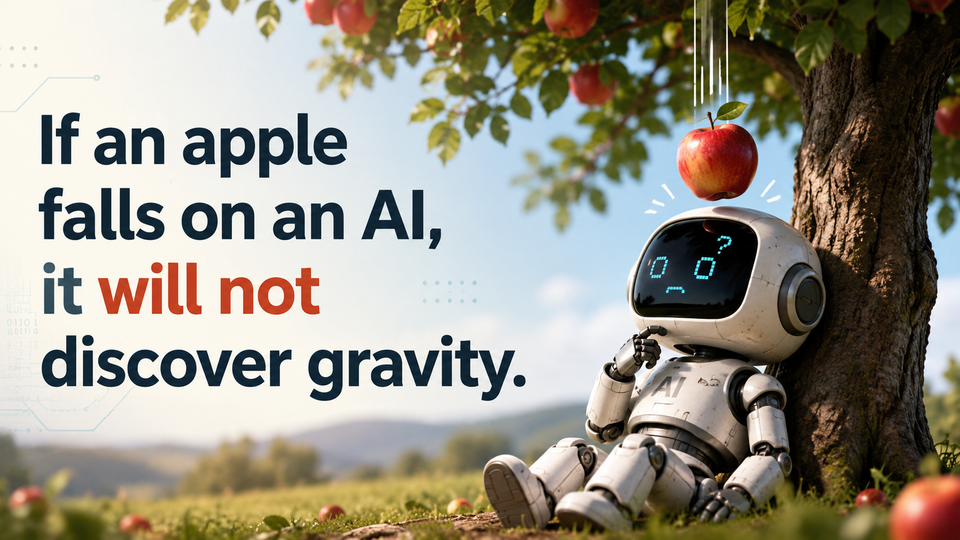
If an apple falls on AI, it will not discover gravity
Hey there!
It has been a few weeks since I wrote - I've been super busy with client travel. It's a tiring endeavor to maintain as the portfolio grows but I never regret investing in-person time with clients - always returns a ton of value on both sides.
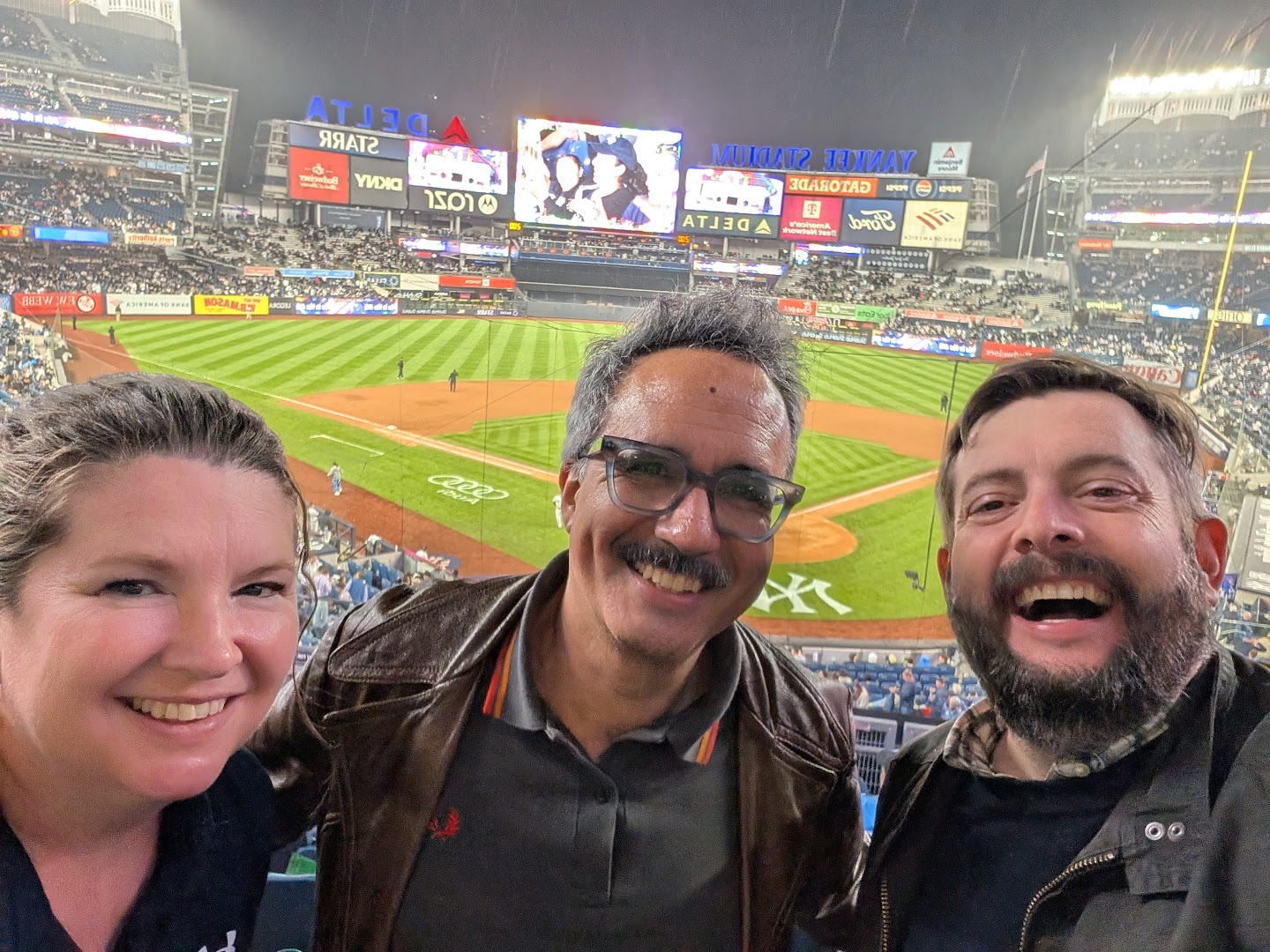
Big thanks to one of my very first clients who had spare tickets, I was able to visit Yankee Stadium with another client while I was in NY! A great night was had by all, despite the rain!
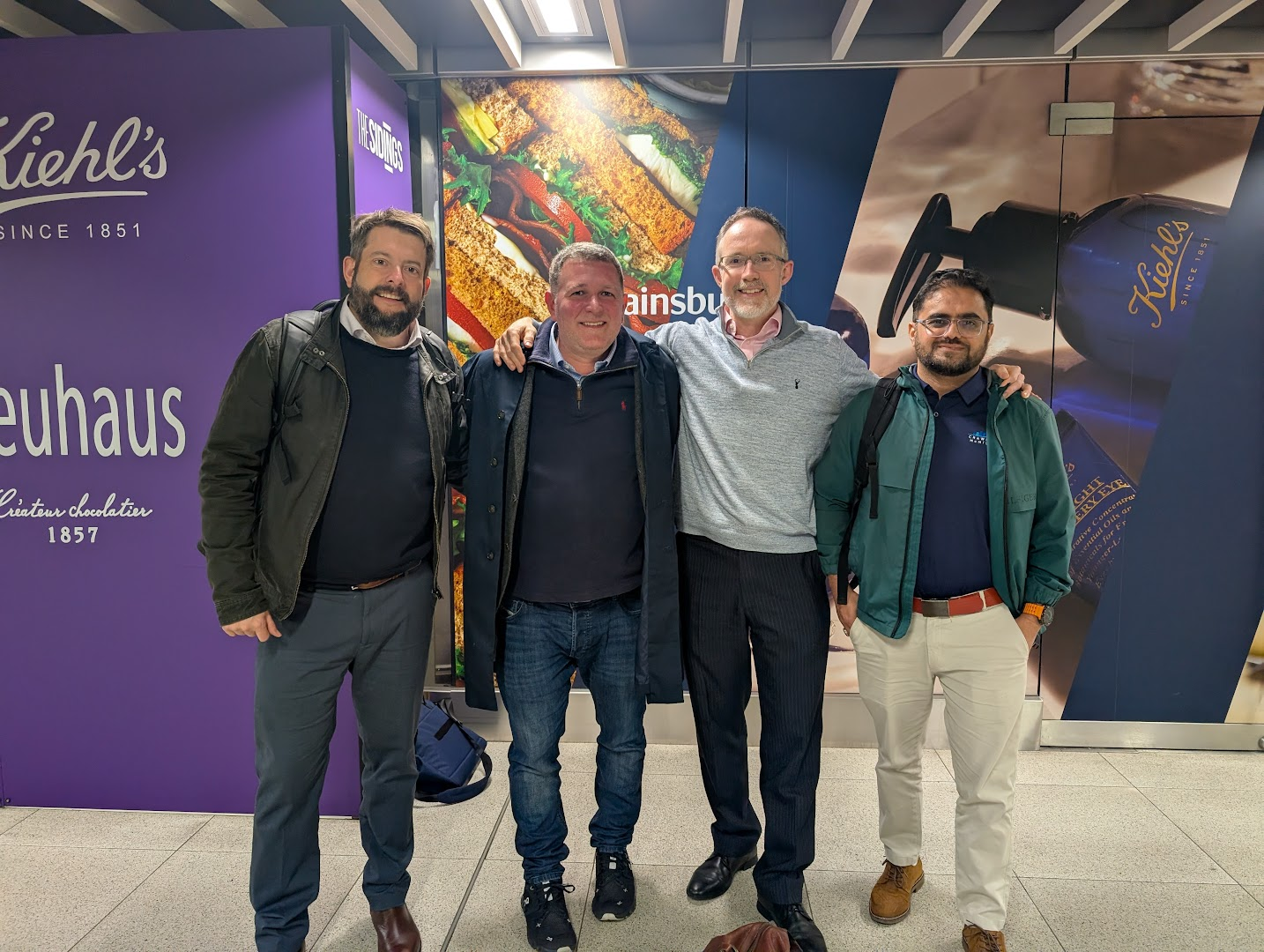
I was then in London leading a 1-day workshop for a PE client's data assessment - always great to be back in my homeland, however briefly!
This week's PE Data Guy episode is with Elon Salfati, founder of Salfati Group, a Zurich-based AI consultancy that works with PE-backed businesses and enterprise operators. He has advised the UK House of Lords on AI policy alongside Microsoft and Palantir leadership. He is doing his PhD at Imperial on building AI in a way that is secure by design.
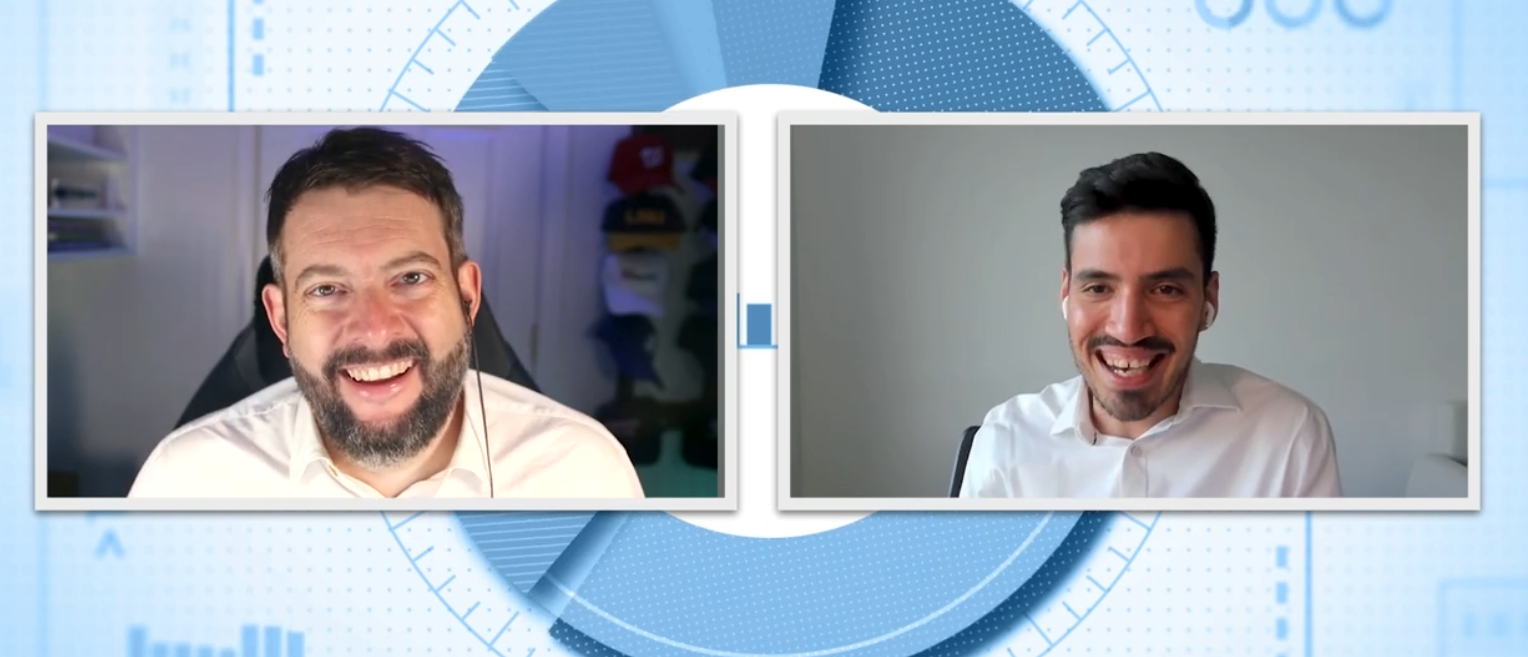
The conversation kept landing on the same idea from different angles. Most companies are asking the wrong AI question. The right one changes what the operating partner conversation should look like in 2026.
More from Elon below. Enjoy the rest of the memo.
Cheers,
Graeme
Three Things I Learned This Week
Greg Isenberg on what "AI-native" actually means.
Most companies saying they're AI-native have a custom GPT and a Notion page. Greg's bar is higher: an AI-native company has been restructured so agents can operate inside it. Data, policies, workflows, and permissions have been made legible to machines.
The PE read-through: every portfolio company being asked to "add AI" is hitting the same wall that wrecks exits. Pricing logic in spreadsheets. Customer truth scattered across inboxes. Policy by tribal knowledge. You can't bolt agents onto that, and you can't sell it for a clean multiple either. Same diagnosis, two symptoms. The firms that figure this out first will compound the advantage twice - once in operating metrics, once at exit.
Decision sovereignty is the line you do not want to cross
Elon's phrase from the podcast that I am going to keep stealing is decision sovereignty. The idea sits in the middle of two failure modes that I see all the time.
Mode one. Companies that hand the strategic decision over to the LLM. Executives get excited because they generated a 2027 marketing plan with a single prompt. The line that landed for me. "If a thousand companies asked AI for the same plan, half of them get the same plan." You are not creating differentiation. You are creating the appearance of strategy while losing the proprietary judgment that was supposed to be your moat.
Mode two. Companies that refuse to engage with AI because the risk feels too high. They lose ground every quarter to the operators who figured out how to use the tool without surrendering the judgment layer.
Decision sovereignty is the discipline of using AI to amplify human decision-making rather than replace it. The PE-relevant version. Use AI to compress the operational layer, free up management bandwidth, and put more time against the decisions that actually move valuation. Do not point AI at the decisions themselves and expect a differentiated portfolio company on the other side.
The line that lands hardest. "If an apple falls on the head of the server of an LLM, it will not discover gravity. We have that. We need to maintain that."
The PE thesis hiding inside service businesses
The most operator-relevant part of the conversation. Elon walked through a thesis on the podcast I had not heard articulated this cleanly before.
Take a fragmented service business. Plumbing. Home services. Anything where the operating model today is humans coordinating humans with a back office stitching invoices together. Restructure the company so AI runs the orchestration layer. The marketplace, the dispatch, the scheduling, the customer interaction, the invoicing, the follow-up. The plumber stays human. The business around the plumber becomes software.
Now every tuck-in acquisition is no longer a roll-up arithmetic problem. It is a transformation problem. You absorb the new company into the software backbone and the unit economics change. Margin expands. Customer lifetime value goes up. Acquisition cost comes down. The valuation multiple shifts from a services multiple to something closer to a software multiple.
For PE firms running roll-up theses in fragmented services, this is the play to think hardest about. The competitive advantage is not "we own more plumbing companies than the next firm." It is "we have rebuilt the operating layer underneath the plumbing companies and every tuck-in lifts the platform multiple." Same M&A engine, very different exit story.
Watch the full conversation with Elon here.
Two News Stories From This Week in Mid-Market PE and Data
Anthropic, Blackstone, H&F, and Goldman put $1.5B behind the AI deployment thesis
What happened. On May 4 Anthropic, Blackstone, Hellman & Friedman, and Goldman Sachs announced a new AI-native enterprise services firm, capitalized at roughly $1.5B with $300M each from Anthropic, Blackstone, and H&F. The consortium adds General Atlantic, Leonard Green, Apollo, GIC, and Sequoia. The model is Palantir-style forward deployment.
Anthropic engineers embedded inside the new firm, partnering directly with mid-sized companies to design, build, and operate Claude inside core business processes. Initial customer pipeline comes from the founders' portfolio companies. Within the same news cycle, OpenAI announced a near-identical structure with TPG, capitalized at around $10B.
Why you should care. The bet is not on the model. The bet is on the delivery layer. Jon Gray at Blackstone named the bottleneck out loud. The scarcity of engineers who can actually take AI from proof of concept to live operational system at scale.
Translation: Every PE-backed company that has been telling its board "we are exploring AI" just got benchmarked against a portfolio company down the street that has Anthropic engineers embedded in its operations. The operator question is the one Elon kept landing on in the podcast. Are you adopting AI tools, or are you rebuilding the operating model around them. Two very different conversations, and the gap between the answers is about to show up in valuation.
Mid-market multiples climbed to 9.2x. The small end of mid-market did not.
Sources: PE Professional
What happened. Median TEV/EBITDA multiples on US private mid-market transactions hit 9.2x for the trailing twelve months ended March 31, 2026, up from 8.4x in 2024. The gain is not evenly distributed. The $200M to $500M deal range jumped from 9.6x to 11.4x. The $500M to $999M range moved from 10.1x to 12.0x. The $10M to $50M range crept from 7.1x to 7.3x. PowerComps titled the release "Quality Over Quantity." Volume is down. Pricing for the assets that do trade is up.
Why you should care. The headline that valuations expanded gets the airtime. The story underneath is the one that matters for operating partners. Buyers are paying premium multiples for the assets that hold up under scrutiny and walking away from the rest.
The companies in the smaller mid-market that close that gap in the next two quarters are the ones with defensible numbers, a real revenue engine, and a data room that does not leak credibility on day one of diligence. The ones that do not are the ones still on the shelf six months from now wondering why the multiple they were modeling never showed up.
Free Tool of the Week - VCP Data Score
Most value creation plans assume the data exists to execute them. Very few check before the plan is written. The VCP Data Score scores portfolio company data readiness across five dimensions in two minutes. Useful before the next operating partner review. More useful six months before exit.
Take the assessment here
Sign-off
If any of this lands and there is something you think we can help with, just reply. We read everything that comes through.
As always, forward this on to your favorite PE-backed friend.
Cheers,
Graeme