The strong number two is the diligence criterion most PE deals miss

Hello all,
Delayed release this week, thanks to my attendance at ACG DealMax in Las Vegas.
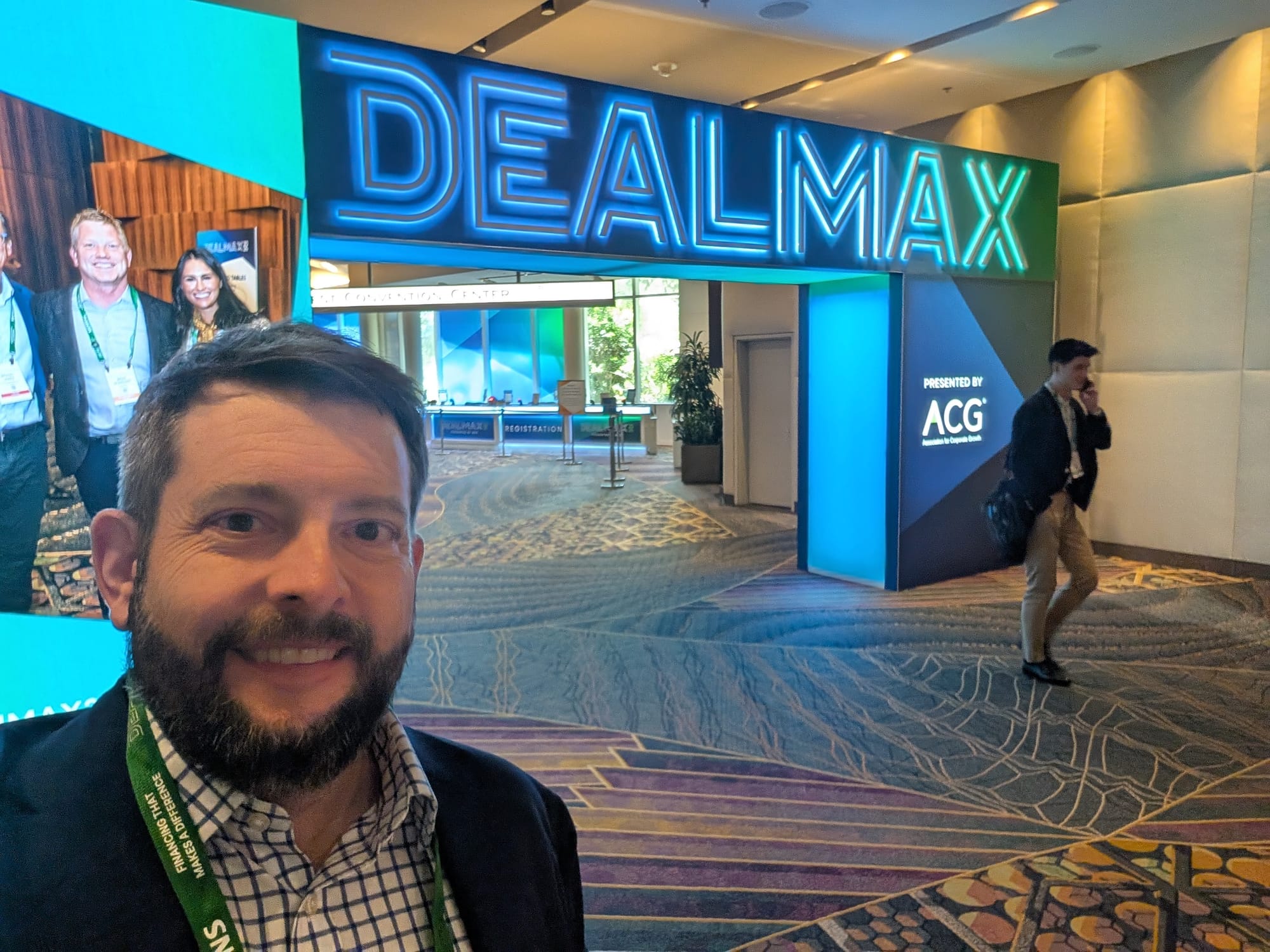
As well as all the great one-on-one meetings that the event makes possible, here are the key themes that folks are talking about on and off the stage.
- Universal acceptance that operational value creation is now a must-have for creating investor returns. Fully understanding how a business works (or doesn't work) is more important than it's ever been.
- AI and its potential impacts are not as well understood as they are in the tech circles I mix in. P.E. on the whole is still figuring AI out but the first wave of SaaS tools is very much in play. These are mainly focused around efficiency and organization of information, particularly in diligence and deal assessment.
- For building relationships and expanding horizons, still nothing comes close to the value of an in-person event, particularly one focused around your ideal client and all of their pain points, as this was for me.
I have a lot more travel on the books in the next couple of weeks. I look forward to continuing each of these themes as I make my way up to New York and then back to Europe on my next trip.
Three Things I Learned This Week
The holdco model is what PE looks like when you take the clock off
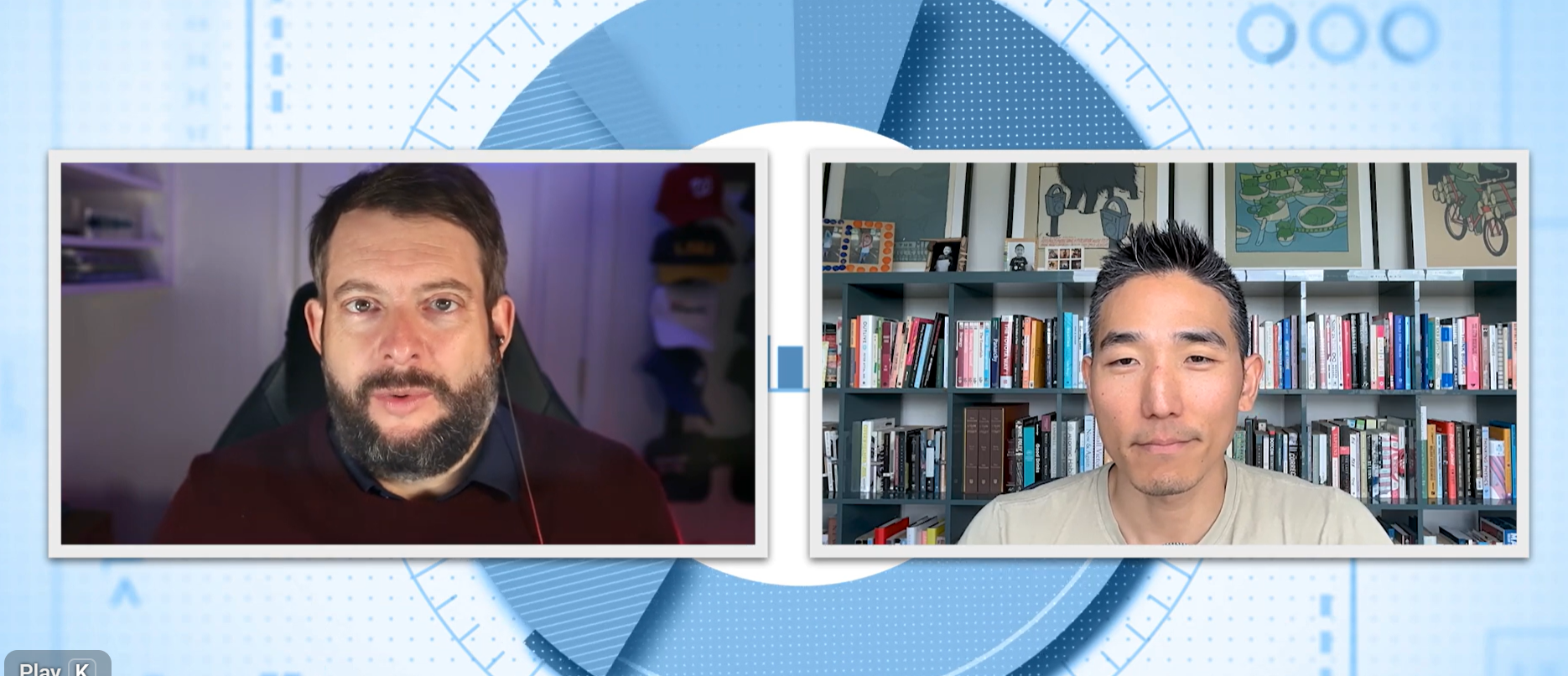
This week’s PE Data Guy epsiode is with Peter Kang. Peter co-founded Barrel, a digital agency, in 2006 with his college friend Sewuk Kim. They were glorified freelancers for the first five years, then operators for the next ten, and only began acquiring other agencies once their original business was throwing off enough cash to fund the next one. Twenty years in, Barrel Holdings is now a portfolio spanning e-commerce, Amazon, B2B marketing, and home services. Peter just published the Holdco Guide and built a viral browser game called Holdco Tycoon, vibe-coded with Claude Code, that simulates the capital-allocation decisions he has spent the last few years making.
Peter is doing what PE does. He raises capital, he buys cash-flowing businesses, he installs operating discipline, he allocates retained cash flow back into acquisitions. The mechanics are the same. The difference is the clock. He has no LPs demanding distributions. He has no fund cycle. He spent fifteen years operating before he picked up the capital allocator hat, and he uses that operator instinct on every deal.
Peter said “If you’re so eager to grow topline through M&A, you end up talking yourself into doing deals that might not otherwise make sense. Or you overpay.” That is not an indictment of PE. It is an observation about what time pressure does to capital allocation discipline regardless of who is holding the capital. The interesting question is whether the PE firms that are building patient-capital strategies, longer holds, continuation funds, evergreen vehicles, are quietly converging on the holdco model, and whether the firms that ignore that convergence are going to look slow inside a decade. Watch the conversation here.
The diligence criterion most PE deals miss is the strong number two
Peter named a screening rule on the podcast that I have not heard another PE practitioner articulate as cleanly. When he evaluates an agency for acquisition, he is not just looking at revenue, retention, and concentration. He is looking for whether there is a genuine number two, a leader inside the business who has the team’s trust and a real handle on operations, sitting underneath the founder.
The reason is structural. Peter finances acquisitions with SBA loans, which require the founder to transition out within a year. If there is no internal successor, the integration runs through someone parachuted in from outside, and the team reads that as a takeover. Trust evaporates. Good people leave. The numbers that justified the multiple stop holding.
This is the same mistake Peter watches PE firms make on every roll-up. The deal closes, the playbook lands, the new operator gets installed over the existing team, and nobody asks whether the culture that produced the cash flow you just paid for can survive the transition. Peter’s frame is that the founder is rarely the constraint. The constraint is whether the second layer of leadership is strong enough to keep the team rowing in the same direction once the founder steps out. If it is not, no amount of post-close playbook will rebuild what walked out the door in month four.
A practical implication for operating partners. Add a question to your management diligence. Not “is the CEO replaceable” but “if the CEO left tomorrow, who runs the business on Wednesday.” The answer tells you whether the deal you are about to do is a continuation or a rebuild dressed up as an acquisition.
The 5% number explains a lot of what PE is actually doing right now
Grant Thornton’s 2026 PE AI Impact Survey, published last week, includes a number worth holding next to the industry’s marketing. Only 5% of PE-backed companies have fully integrated AI. Cross-industry, that number is 14%. In tech-focused portcos, it is 40%. PE talks about AI more loudly than any other capital pool and ships less of it. 45% of PE-backed companies are still piloting.
Hold that next to Peter Kang. Peter is a solo holdco operator with no AI team and no engineering org, and he vibe-coded a viral marketing asset for his book using Claude Code in a few weeks. Meanwhile the average mid-market PE portfolio company is on its third AI strategy deck and its second pilot.
The reason for the gap is not technological. It is structural. Peter ships because he controls his own capital allocation, his agencies have small enough teams to actually deploy a tool end to end, and there is no committee asking for an enterprise AI strategy before anyone gets to write code. PE-backed mid-market companies have the opposite conditions. The AI work gets sponsored by the operating partner, scoped by a vendor, piloted by an internal team that already has a day job, and abandoned when the next quarter’s KPIs come due.
If you are an operating partner, the question is not how many pilots you have running. It is how many production-grade AI tools your portfolio companies have actually deployed and would not turn off if asked. The honest answer is the gap between Grant Thornton’s 5% and the industry narrative.
Two News Stories From This Week in Mid-Market PE and Data
Q1 2026 PE exits fell 6.25% YoY. The headline value number was a single mega-deal mirage.
Sources: S&P Global Q1 2026 Exit Volume | Bain Global PE Report 2026
What happened. Global PE exit volume dropped from 768 transactions in Q1 2025 to 720 in Q1 2026, a 6.25% decline. Trade sales and secondary buyouts both fell. Aggregate exit value spiked to $311B, but only because of the single $250B SpaceX/X.AI transaction. Strip that out and the structural exit picture is weaker than the headline number, not stronger. Sit it next to Bain’s Global PE Report. There are now 32,000 unsold PE-backed portfolio companies waiting on $3.8 trillion in trapped capital. Distributions to NAV have stayed below 15% for four consecutive years, an industry record. The five-year rolling DPI hit its lowest level ever in mid 2025.
Why you should care. The exit market is not coming back to clear the overhang. It is reopening selectively. Buyers are taking longer, asking more, and pricing thoroughness into the diligence timeline. The companies that move first in the next two quarters will be the ones with defensible numbers and a clean data room before the bankers start the process. The ones waiting for the cycle to turn will find that the cycle never arrives in the form they were expecting. It splits. The companies with investor-grade reporting trade. The companies with management-grade reporting wait, then trade at a discount, then explain to their LPs why the multiple compressed. The 0.4x EBITDA gap that GF Data measured between sellers with a data quality assessment and sellers without is what the difference looks like in dollars.
72% of GPs now name operational improvement as the top value-creation lever. The financial-engineering era is officially over.
Sources: S&P Global 2026 PE Survey | BCG Digital-First PE 2026
What happened. S&P Global’s 2026 PE survey landed two weeks ago and the headline number got buried. 72% of GPs now rank operational improvement as the top value-creation lever, ahead of multiple expansion and ahead of leverage. That is a structural shift, not a cyclical one. Only 38% of GPs expect higher 2026 deal volumes. Only 20% expect valuation improvement. The industry is no longer betting on rates falling and multiples expanding to bail out underperforming holds. It is betting on operations. Layer in BCG’s data and the picture sharpens. Digital-mature portcos with AI deliver 30-35% return on invested capital. Digital alone delivers 15-20%. Time to value accelerates 40% when AI rides on a mature data foundation. 40% of investors have already taken a 5%+ valuation haircut on portfolio companies with low digital maturity.
Why you should care. The capital allocator who used to win on price discipline now wins on operating leverage, and operating leverage now runs through data quality. That is not a slogan, it is a sequence. You cannot run a value creation program on data you cannot trust. You cannot deploy AI on a data foundation that nobody owns. You cannot defend a forecast at exit if your revenue number cannot be traced to source. The firms that build the data discipline early are the ones whose value creation programs compound. The firms that wait until the exit prep window is the ones whose programs stall. The 72% number means you are now competing for alpha against firms that have already made the operational pivot. The question is which side of the split your portfolio company sits on.
Free Tool of the Week - AI Readiness Assessment
Most PE-backed companies have an AI strategy. Far fewer have an AI foundation. The AI Readiness Assessment scores your portfolio company across the five conditions that determine whether an AI initiative will ship to production or stall in pilot. Two minutes. One page. Useful before the next operating partner review, more useful before you sign off on the next pilot.
Sign-off
If any of this lands and there is something you think we can help with, just reply. We read everything that comes through.
As always, forward this on to your favorite PE-backed friend.
Cheers,
Graeme