
Nobody blames ChatGPT when it rains on your itinerary

We had friends in town this last weekend so I spent a lot of time doing the DC tourist thing - which only really happens in this circumstance.
Our guests spoke about how lovely it was to just go with the flow, no planning required and to know that they'd hit all the highlights. It was also high in the literal sense with my first trip up the Washington Monument, pictured in the back here.
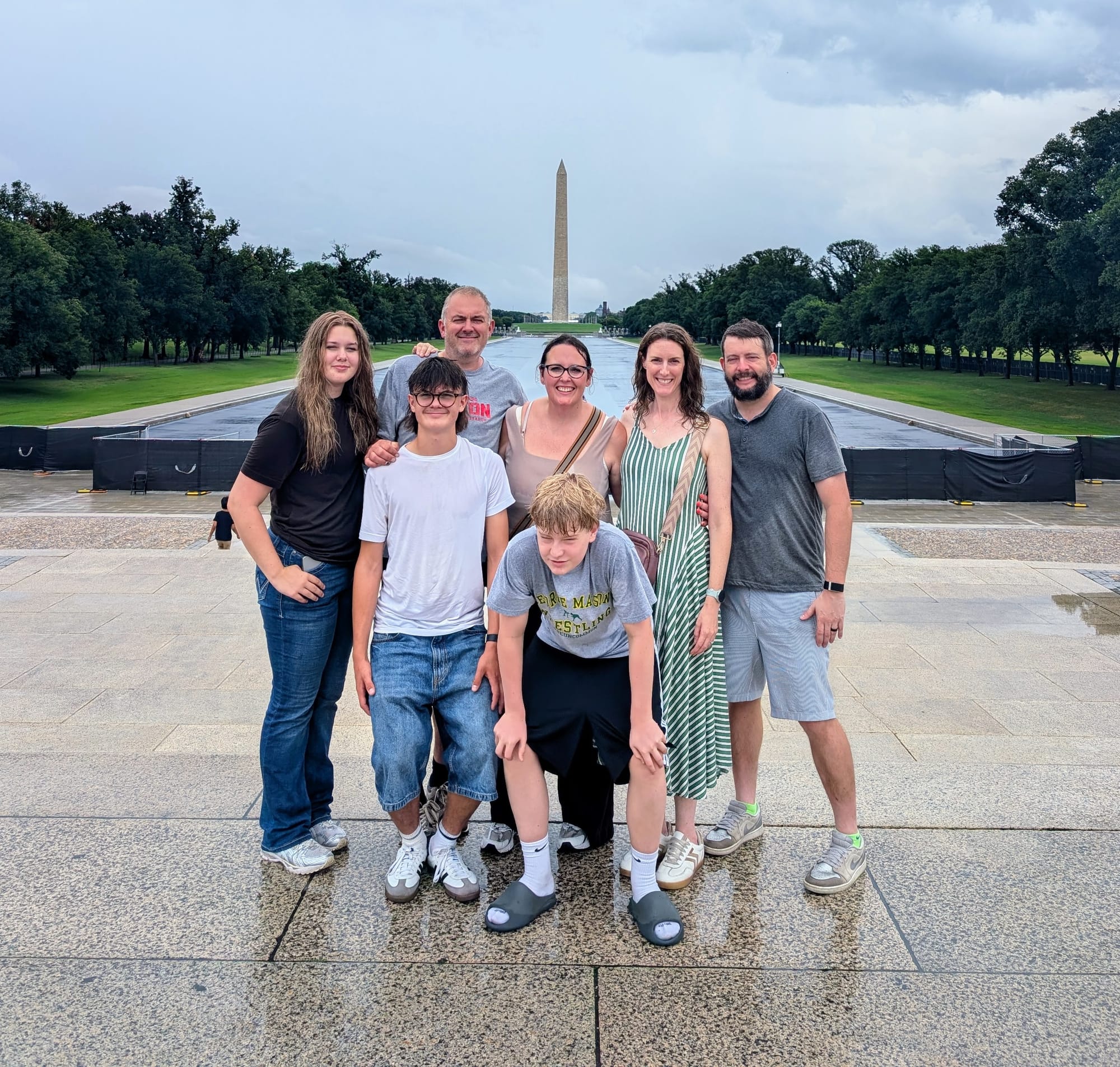
This raised something interesting for me - they could have put together a great 'DC in a day' itinerary on ChatGPT and - probably - it would have hit many of the same places as mine did. And yet....there is no first-person authority to stand behind it and say 'this is doable', 'this involves 20k steps of walking' or 'here's how we'll adjust it when it rains' (which it very much did).
Without someone to vouch for it or, being honest, to blame if it went wrong then it just doesn't land the same. Something to ponder the next time you see some AI software that claims it will revolutionize your business with the click of a button.
There are many places human will continue to add value for a long time but 'AI can't do this', 'AI doesn't have taste', and 'AI hallucinates' are rapidly waning arguments that I don't recommend any business tries to stand behind. It's certainly not my plan.
Podcast feature lessons back next time, I recorded 2 awesome episodes last week that are in the editing hopper. Enjoy the rest of the memo!
Cheers,
Graeme
Three Things I Learned This Week
Pilot purgatory now has a price tag and a deadline
Accordion’s new PE AI adoption benchmark puts a name on the state most portfolios are in. Past casual experimentation, nowhere near what they call genuine operating leverage, and missing the operational playbook that connects the two. Pilot purgatory. You have seen it. The demos went well, the working group meets monthly, and nothing has moved an EBITDA line yet.
The number in the report that matters is this one. 86% of operating partners expect buyers to pay a premium for AI-enabled finance capability within two years. The premium is for a finance function where the capability demonstrably works, not for a pilot count or a roadmap slide.
Two years is a short runway when the gap between pilot and capability is the part nobody budgeted. The models are fine. What stalls is everything underneath them, the clean data the workflows depend on and the people who have to work differently. That work is unglamorous and it is the whole distance between purgatory and premium.
FTI’s value creation team added the sequencing advice worth taping to the exit deck. “If your exit narrative leads with AI-enabled, you’re selling last year’s story.” Lead with margins, revenue scalability, and market position. Then show the AI underpinning them. The premium goes to the company that can prove the second part, and proof is a data artifact.
Sources: Accordion, Middle-Market CFOs and AI’s Messy Middle | FTI Value Creation Index via Preqin
Berkshire Partners gave data a seat at the operating partner table. Lee McCabe told you why five months ago.
Berkshire Partners created a new role, Operating Partner and Head of Data Science and AI, and filled it with Richard Lichtenstein, Bain’s former Chief Data Officer. Read that title again. Not a director of digital initiatives buried two levels down. An operating partner, with the platform mandate that comes with the seat. The commercial logic is already visible in the numbers the trade press attached to the story. Mid-market portfolio companies are reporting 160 to 280 basis points of EBITDA improvement from AI automation within two years.
Back in February I had Lee McCabe on the podcast. Lee launched eBay in the UK, was Facebook’s first global head of travel, ran Alibaba’s North American business, then walked into private equity and found an industry running 20 years behind on all of it. His sharpest point was about the operating partner model itself. The firm owns the company, and yet, in his words, the operating partner still acts like a vendor. “They’ve got no power to actually come in and do it. It’s all influence.” The CEO says not a priority right now, and the operating partner knocks on the next portfolio company’s door.
A named fund putting data and AI at operating partner level is the structural answer to exactly that complaint. It says this work is no longer a suggestion the portco can wave off in a board meeting. It sits where pricing and procurement sit, in the value creation plan, with authority attached.
One line from the coverage worth keeping. Today, sponsors create AI gains. In five years, buyers will simply pay for them. The window where this work generates alpha instead of table stakes is the holding period you are in right now. Watch the Lee McCabe conversation here.
Source: PE Professional, The AI Debate Is Missing One Thing. EBITDA.
Your mark is probably fine. Getting to the exit that proves it is the problem.
An MSCI analysis surfaced a stat that reframes the whole markdown anxiety conversation. Roughly 75% of buyout assets still exit above their next-to-last quarterly mark, which is about the cleanest measure of valuation accuracy you can get before an active sale process. Marks, in aggregate, are holding.
Here is the uncomfortable read. That statistic only covers the assets that reached an exit. Bain counts roughly 33,000 unsold portfolio companies waiting for their turn to have their marks tested. The mark is a claim. The exit is the evidence. And the queue between the two is now years long, which means the real risk to a sponsor’s track record is an asset that never gets to the event that proves its mark right.
Bain’s own prescription this month was titled Show, Don’t Tell. Refresh the exit story for every portfolio company with demonstrable, verifiable evidence rather than narrative. That is the connection to the work this newsletter keeps banging on about. The companies that transact are the companies whose claims a buyer can verify quickly. Defensible numbers are what convert a paper mark into a realized one.
Source: Bain Private Equity Midyear Report 2026
Two News Stories From This Week in Mid-Market PE and Data
The quietest quarter for sponsor-to-sponsor exits in at least a decade
Sources: PitchBook Q2 2026 US PE Breakdown via Yahoo Finance
What happened. PitchBook’s Q2 US PE breakdown counted $102.6 billion in exit value, down roughly 46% quarter over quarter. Sponsor-to-sponsor exits fell to 94, the lowest quarterly count in at least a decade. IPOs tripled their share of exit value to around 31%, but that was 5% of exit count, concentrated in a handful of mega-cap listings.
Why you should care. Sponsor-to-sponsor deals are the mid-market’s natural exit route, and 94 in a quarter means that door is barely moving. The IPO number does not help you. Almost no mid-market portco lists. When the primary buyer for your asset is another sponsor, and sponsors are this selective, the sale process becomes a referendum on how quickly the buyer’s deal team can convince their investment committee. Every unanswered diligence question is a week of delay, and in a market this thin, delay is how deals die. The exit environment is out of your hands. How fast your numbers survive contact with a skeptical buyer is not.
NDA volume just broke a 17-month drought. The clock on diligence season started.
Sources: Ontra Market Index via Business Insider | S&P Global Market Intelligence, July 8
What happened. Ontra’s mid-year Market Index, built on NDA volume across private markets, recorded a 7.2% year over year jump in June, the first month above seasonal norms in 17 months. Q3 deal volume is projected up 3.2%, which would make the first back-to-back quarters of growth in the index’s 39-month history. NDAs signed in June typically convert to closings around September.
Why you should care. NDAs are the earliest signal in the deal pipeline, which makes this the first hard evidence that the thaw is starting, and it puts a date on it. Processes forming now hit diligence in late summer and close in the fall. That is the window for readiness work, and the question list has grown. S&P Global’s exit coverage this month quoted advisors saying targets without a credible answer on how AI affects their business face “a lot more questions than you want during a diligence process.” So the bar for September is defensible numbers plus a defensible AI story, and as the EY finding we covered in June put it, you cannot evidence the second without the first. If a sale process is anywhere in your next 12 months, the preparation clock started in June whether anyone told you or not.
Free Tool of the Week - The Mid-Market PE Firm Directory
We featured this last edition and it earned the repeat. In its first twelve days live, the directory drew 43% of everyone who visited our site. Nothing else we have published comes close, which tells you something about how starved this corner of the market is for structured, unpaywalled firm data.
If you missed it, the directory covers 218 US mid-market private equity firms. Check sizes, target EBITDA, sector focus, and whether they build through add-ons, all compiled from primary sources. Filter by sector, state, or strategy. Useful for mapping who buys in your space, benchmarking your own sponsor’s peers, or handing to a founder friend who keeps asking you how PE works.
Sign-off
If any of this lands and there is something you think we can help with, just reply. We read everything that comes through.
As always, forward this on to your favorite PE-backed friend.
Cheers, Graeme