
The AI machine kept buying. Nobody in the room questioned it. $881 million later, Zillow shut the whole unit
The mid-year travel flurry continued this week with a trip down to Miami. I was able to attend the FIFA fan zone for a Mexico game and enjoy the largely Mexican crowd party through the one hour delay to kick off.
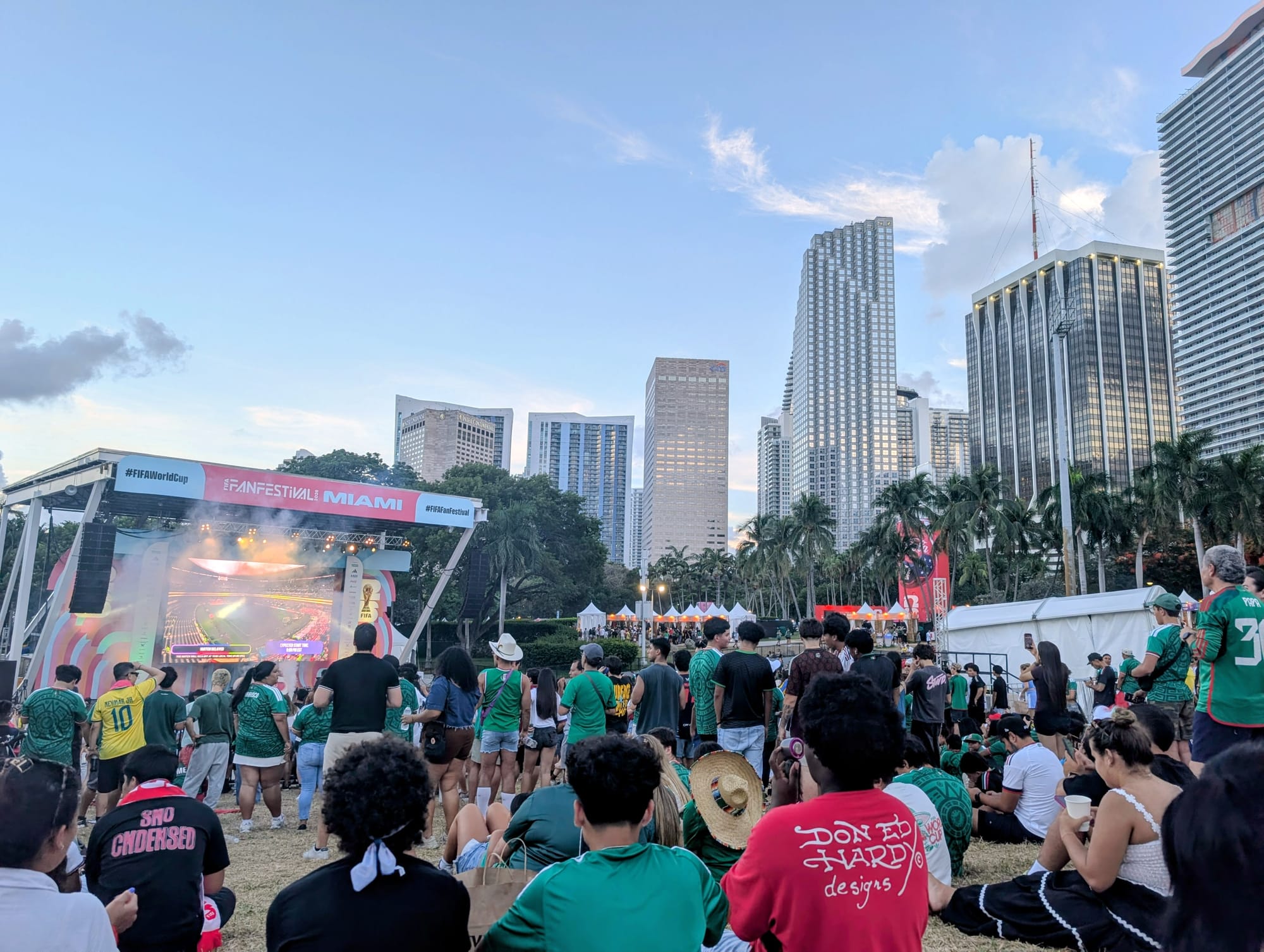
Whether it’s football, or comic book conventions or fountain pen shows - whenever I go somewhere where large groups of people are sharing a passion, the atmosphere is special.
The online version of that this week has been the limited release of Claude Fable - people everywhere equipped with the best ever mega-powerful AI model to chase their dreams for a small window.
The key skill for getting the best AI outputs has taken another leap. It used to be ‘prompt engineering’ then ‘context engineering’ - with Fable it’s your ability to describe the problem you’re trying to solve and the dream outcome.
With GPT 5.6 making a big splash late last week, I wonder if Anthropic will close Pandora’s Box as promise and look to capitalize on those hooked on Fable through API credit payments or if they’ll push the window back further still.
These big AI companies need to flip the polarity and start to make money at some point. Is it now? Let's see...
Enjoy the rest of this week’s memo!
Cheers,
Graeme
Three Things I Learned This Week
HD ready came before the broadcast signal. AI ready works the same way.
This week's PE Data Guy is with Ben Banks. Ben has spent 30 years inside complex operational systems, 18 of them leading global integrations, transformations, and exit readiness programs, the last eight with tier one funds and their upper-mid and large-cap portfolio companies. He built the Growth Engine, an operating framework for making integrations faster, cheaper, and cleaner with every acquisition. He is also one of the few people writing about AI in PE who has actually run the operational work underneath it.
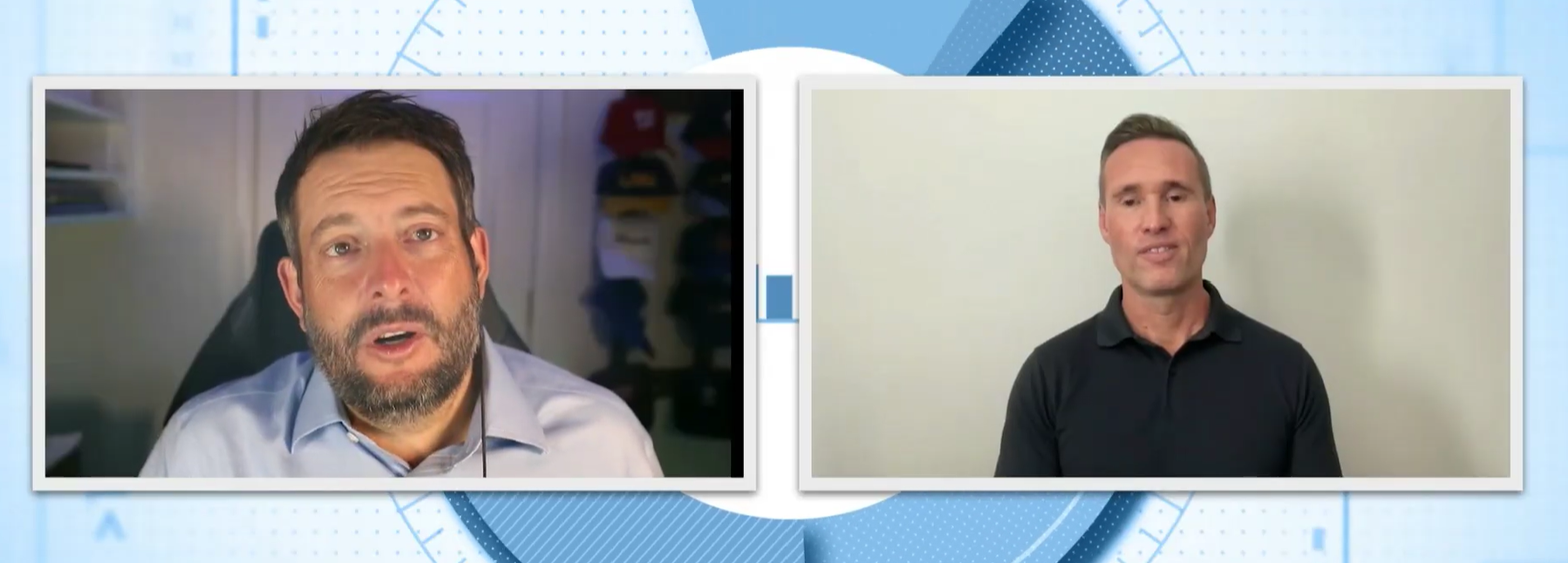
Ben's frame is the one I want you to steal. Remember HD ready televisions? The sets shipped years before the broadcast signal existed. Buying one early looked pointless right up until the moment it wasn't. Enterprise agentic AI, the end-to-end autonomous kind rather than the chatbot in your CRM, is the broadcast signal. Ben puts its arrival around the end of 2027. What you can buy today is point solutions. Task agents. Silo agents that live inside one system. Useful, but not the wave.
The wave requires what Ben calls the transformation stack to be unified top to bottom. Business model, operating model, systems, processes, people and culture, and data at the base. Nobody puts out a press release saying "we consolidated our two ERPs and redefined our operating model." But that is the actual AI work. The companies loudly announcing AI pilots are mostly not doing it. And the work takes 12 to 18 months, which means the window to start is now, not when the wave arrives.
The line from the conversation that stuck with me. You can talk your way through being AI-forward right up until enterprise agentic ships. Then you have to walk. Watch the conversation here.
Zillow lost $881 million the way every unready company will. One stack layer at a time.
The best part of the episode is Ben's autopsy of Zillow Offers, because the failure touches every layer of the stack and it happened with 2021-era machine learning. Weaker technology than what any portco can switch on today.
The business model assumed positive arbitrage and never priced the scenario where the market turns. The operating model had a machine at the front buying homes at full speed while COVID slowed the renovation contractors in the middle and cooled the buyers at the end. The system, the Zestimate, could roughly price a house but had no throttle. It was flat-out buying or nothing. The processes had no feedback loops, so nothing the contractors or the sales team were seeing ever reached the buying engine. The culture had built the whole unit around a machine brain doing things humans couldn't, so nobody dared question it while prices fell and the backlog grew. And the data was smoothed, so the model saw the turn late and kept buying into a falling market. Worse, its own overpayments were feeding back into the comps, inflating the very prices it was buying against.
The numbers Ben walks through. The machine bought roughly 28,000 homes. 18,000 sat in a renovation backlog. It overpaid by up to $30,000 apiece on close to 10,000 of them. The unit lost $881 million and 2,000 people lost their jobs when Zillow shut it down.
I brought up on the episode a description of AI I keep coming back to. Amplified intelligence, not artificial intelligence. That is the right way to read this. AI amplifies whatever coherence you already have. Zillow's machine made bad decisions quickly, confidently, and at scale, because it did not know the things nobody had told it. Enterprise agentic is that same pattern with more autonomy across every function of the business. If the stack underneath is fragmented, you are not automating the business. You are automating the fragmentation.
The gap between AI-forward and AI-ready is now showing up in the data
Two research findings this month put numbers on exactly the gap Ben describes.
Grant Thornton's 2026 AI Impact Survey found that only 5% of PE-backed companies have fully integrated AI, against 14% cross-industry. 45% are still piloting. And PE trails the cross-industry average worst on AI governance, which Grant Thornton defines as producing auditable, defensible proof that AI-driven decisions can withstand the scrutiny of a buyer, lender, regulator, or LP. That definition should sound familiar. It is the diligence standard, applied to AI.
BCG's digital value creation work adds the commercial stake. 40% of PE firms report a valuation haircut of 5% or more from digital and data underinvestment at exit. And AI initiatives built on mature data foundations return 30 to 35%, against 15 to 20% for digital initiatives without them. Same tools, roughly double the return, and the difference is the foundation underneath.
Put the two together and the picture is uncomfortable for the AI-forward crowd. The pilots are everywhere. The integration is nowhere. And the buyers have started pricing the difference.
Two News Stories From This Week in Mid-Market PE and Data
The exit backlog just got bigger, and the math says you have time to do the work
Sources: PitchBook data via Yahoo Finance, July 7 | Bain Private Equity Midyear Report 2026
What happened. PitchBook counts 13,325 unsold US portfolio companies, up from 12,900 last October, and roughly 33,000 globally. At the current exit pace, the backlog would take 11 years to clear. Distributions as a share of NAV have now been at record lows for four consecutive years. The Bain midyear data explains part of why the queue is not moving. LPs lose confidence in a GP when a full exit prices more than 5% below the last mark, so GPs hold rather than test the market and risk the markdown.
Why you should care. Read this next to Ben's 12 to 18 month timeline and the backlog stops being just bad news. Almost every portco in the queue has time to do the foundation work before it trades. That is the choice the backlog forces. Companies exiting this window come to market alongside thousands of others, in front of buyers who are underwriting data quality and AI readiness explicitly. The portcos that spend the wait building the stack arrive as the asset buyers are actively hunting for. The ones that spend it waiting for the market to improve arrive as inventory. An 11-year queue does not clear oldest-first. It clears cleanest-first.
PwC's midyear read. Fewer deals, much bigger deals, and DPI now runs the show
Sources: PwC US PE Midyear Outlook 2026
What happened. PwC's midyear outlook shows H1 2026 PE deal volume down 34% while average deal size rose nearly 4x, as capital concentrated in higher-conviction bets. 34% of PE portfolio companies are now held five-plus years, up from 28%. And DPI has overtaken IRR as the metric LPs actually watch, to the point that some sponsors are accepting lower exit valuations simply to put realized returns on the board before the next fundraise.
Why you should care. Every part of this points the same direction. Buyers are doing fewer, bigger, more conviction-heavy deals, which means each one gets more diligence, not less. Sponsors under DPI pressure will sell, the only question is at what price. A sponsor forced to transact with a portco that cannot defend its numbers takes the DPI-driven haircut. A sponsor holding a portco with a clean, verifiable data story gets to sell into the concentration, because high-conviction capital pays for evidence. The market has split into companies that get chosen and companies that get cleared. The finance function's data quality is a bigger part of which side you land on than most operating partners are pricing in.
Free Tool of the Week - AI Readiness Assessment
Ben's 60-second diagnostic asks one question per layer of the transformation stack. Ours goes at the same problem from the data side. The AI Readiness Assessment scores your portfolio company across the five conditions that determine whether an AI initiative ships to production or joins the 45% still piloting. Two minutes. One page. Useful before the next operating partner review. More useful before anyone signs off on an enterprise agentic deployment against a fragmented stack.
Sign-off
If any of this lands and there is something you think we can help with, just reply. We read everything that comes through.
As always, forward this on to your favorite PE-backed friend.
Cheers,
Graeme